

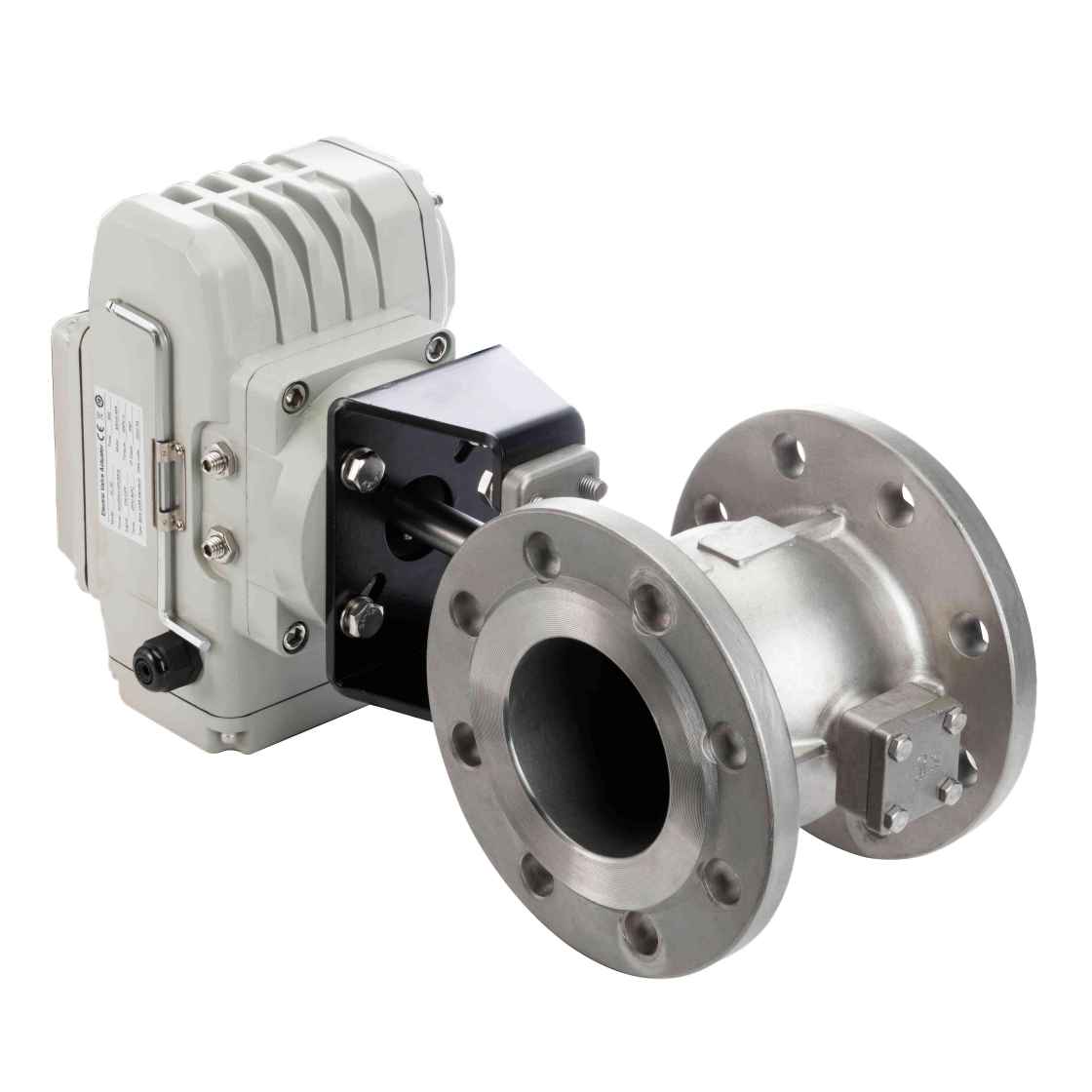
At the heart of the Electric V-ball valve is its distinctive V-shaped ball. Unlike traditional ball valves, which have a fully spherical ball, the V-ball incorporates a cut or notch in the shape of the letter "V." This design facilitates more precise control of fluid flow, particularly when fine adjustments are needed. The V-notch allows the fluid to pass through the valve in a controlled, predictable manner, providing a more linear flow characteristic compared to the standard spherical ball.
The electric actuator attached to the V-ball valve is what sets it apart from manual or pneumtic valves. It uses electrical power to move the valve stem, opening or closing the valve based on signals from a control system. This automation allows for remote operation, real-time monitoring, and integration into complex control networks, offering greater convenience and flexibility for operators.

a Electric V-ball valves represent an innovative solution in fluid control systems, offering exceptional performance in industries requiring accurate and responsive flow regulation. By combining the unique design of a V-shaped ball with the power of electric actuation, these valves provide a versatile and reliable option for various applications, from water treatment to chemical processing. In this article, we will explore the design, advantages, applications, and key features of Electric V-ball valves, highlighting their role in enhancing system performance and efficiency.
Understanding the Electric V-ball Valve Design
 Chat Oline